Starship
Service to Earth Orbit, Moon, Mars and Beyond
Starship overview
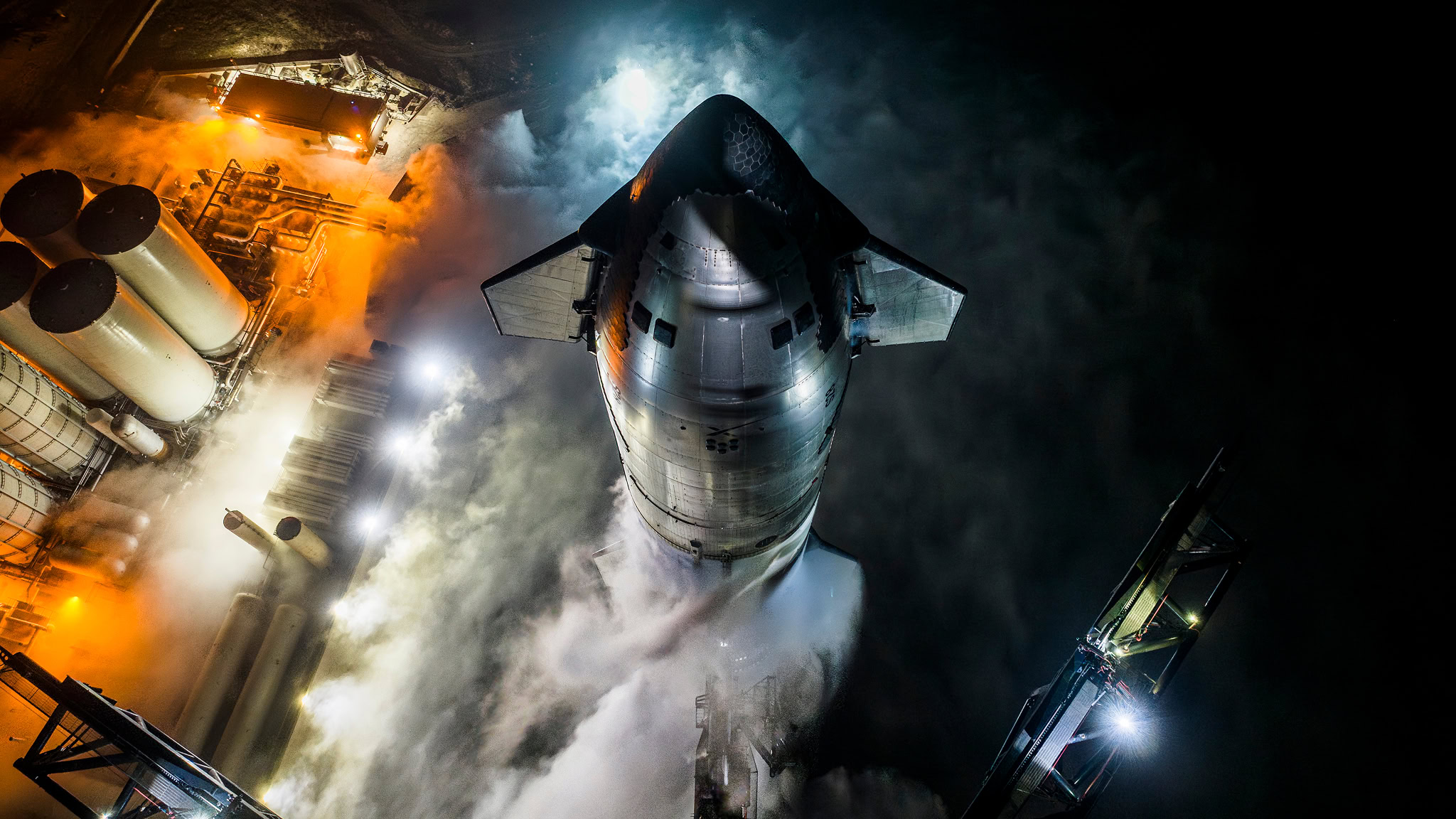
SpaceX's Starship spacecraft and Super Heavy rocket - collectively referred to as Starship - represent a fully reusable transportation system designed to carry both crew and cargo to Earth orbit, the Moon, Mars and beyond. Starship is the world's most powerful launch vehicle ever developed, designed to carry more than 100 metric tonnes to orbit in a fully reusable configuration.
| Height | 124 m / 407 ft |
| Diameter | 9 m / 29.5 ft |
| Payload capacity | 100+ t |
Starship
Starship is the spacecraft and upper stage of the overall Starship system and is being designed for full reusability. The vehicle is planned to come in several different configurations and is designed to carry crew and cargo to Earth orbit, the Moon, Mars, and beyond. Starship’s design could one day enable point-to-point transport on Earth, facilitating travel to anywhere in the world in one hour or less.
| Height | 52 m / 171 ft |
| Diameter | 9 m / 29.5 ft |
| Propellant capacity | 1,600 t / 3.5 Mlb |
| Thrust | 1,614 tf / 3.5 Mlbf |
| Payload capacity | 100+ t |
Super heavy
Super Heavy is the first stage, or booster, of the Starship launch system. Powered by 33 Raptor engines using sub-cooled liquid methane (CH4) and liquid oxygen (LOX), Super Heavy is designed to be fully reusable by returning back to the launch site to be caught by the launch tower and then rapidly reused.
| Height | 72 m / 236 ft |
| Diameter | 9 m / 29.5 ft |
| Propellant capacity | 3,650 t / 8 Mlb |
| Thrust | 8,240 tf / 18.1 Mlbf |
Raptor Engines
The Raptor engine is a reusable methane-oxygen staged-combustion engine that powers the Starship system and has twice the thrust of the Falcon 9 Merlin engine. Starship is powered by six engines, three Raptor engines, and three Raptor Vacuum (RVac) engines, which are designed for use in the vacuum of space. Super Heavy is powered by 33 Raptor engines, with 13 maneuverable engines in the center and the remaining 20 around the perimeter of the booster's aft end.
| Diameter | 1.3 m / 4.2 ft |
| Height | 2.9 m / 9.5 ft |
| Thrust | 250 tf / 551 klbf |
Starship capabilities
As the most powerful launch system ever developed, Starship will be able to carry up to 100 people on long-duration, interplanetary flights. Starship will also help enable satellite delivery, the development of a Moon base, and point-to-point transport here on Earth.
Payload delivery
Starship is designed to deliver payloads farther and at a lower marginal cost per launch than our current Falcon vehicles. With a payload compartment larger than any fairing currently in operation or development, Starship will enable transport of many satellites, large space telescopes, and significant amounts of cargo to Earth orbit, the Moon, Mars and beyond.

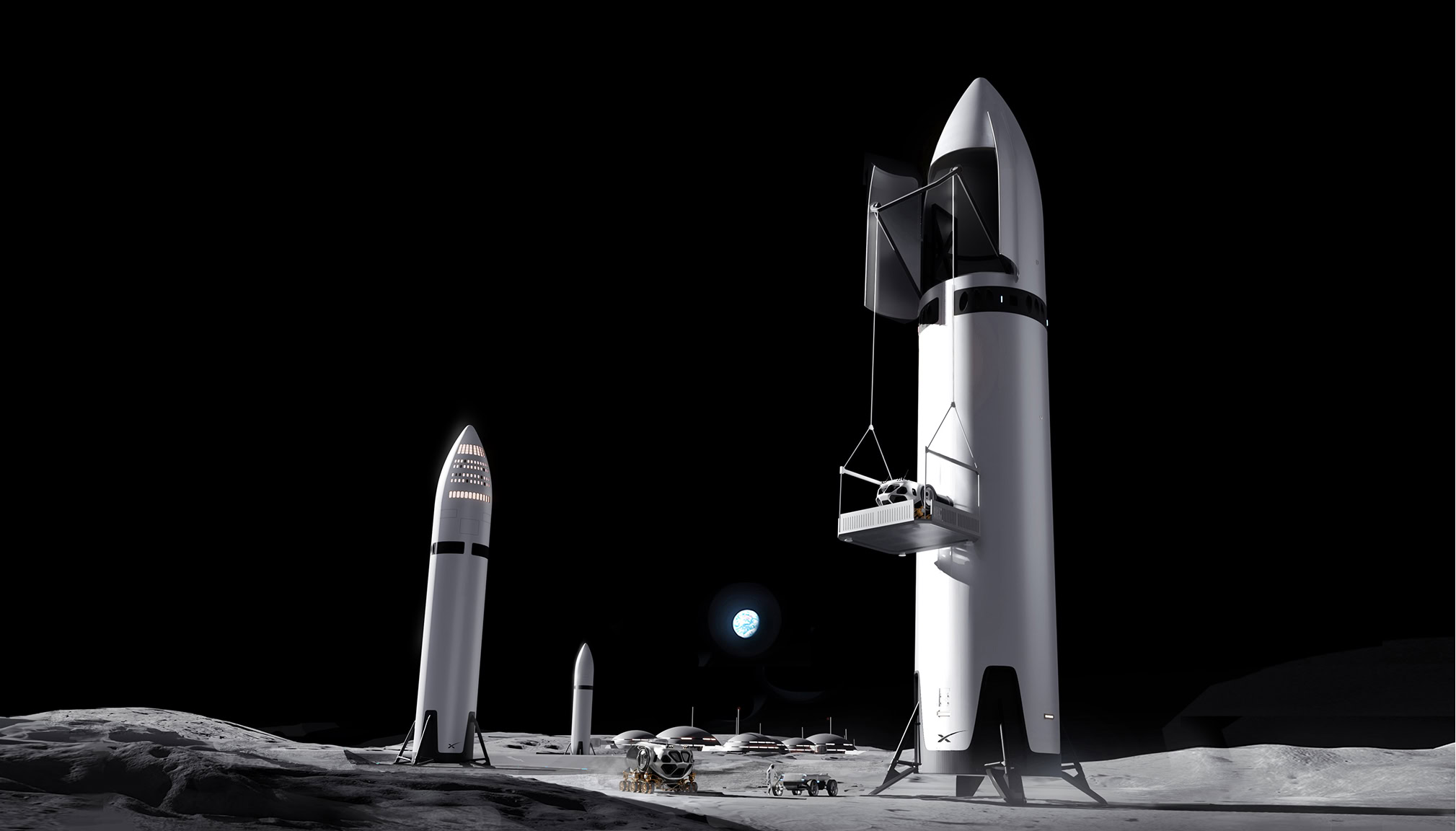
Moon missions
Starship cargo flights to the lunar surface for research, development, and exploratory missions start no earlier than 2028, at a rate of $100 million per metric ton.
Join a Starship human spaceflight mission now, flying around the Moon or landing on the lunar surface.
For additional information on human spaceflight seat or full mission availability, payload masses, pricing details, and timeframes, please contact sales@spacex.com.
Mars Missions
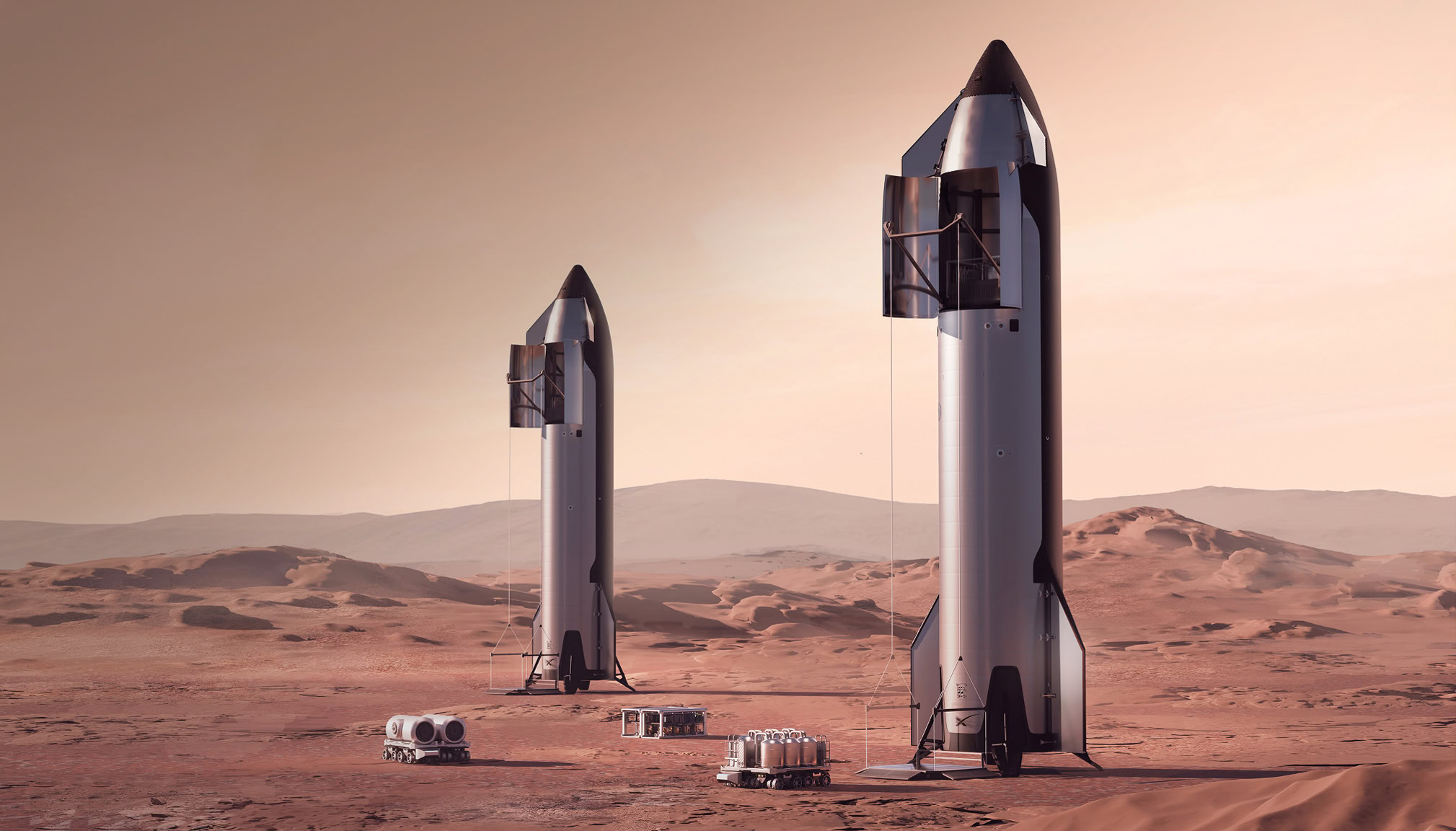
Starship cargo flights to the Martian surface for research, development, and exploratory missions start no earlier than 2028, at a rate of $100 million per metric ton.
For additional information on payload masses, pricing details, and timeframes, please contact sales@spacex.com.
Full and rapid reusability
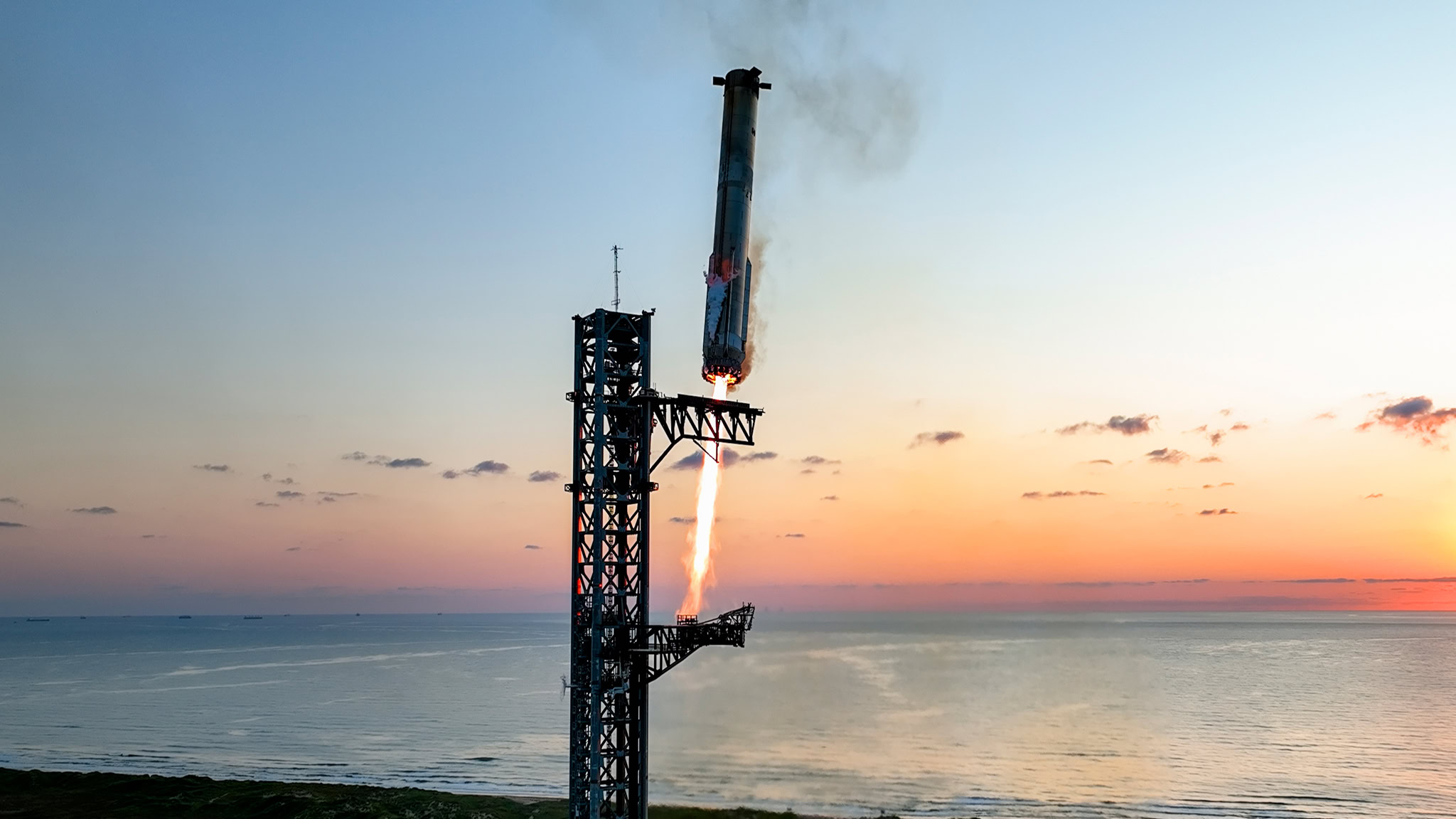
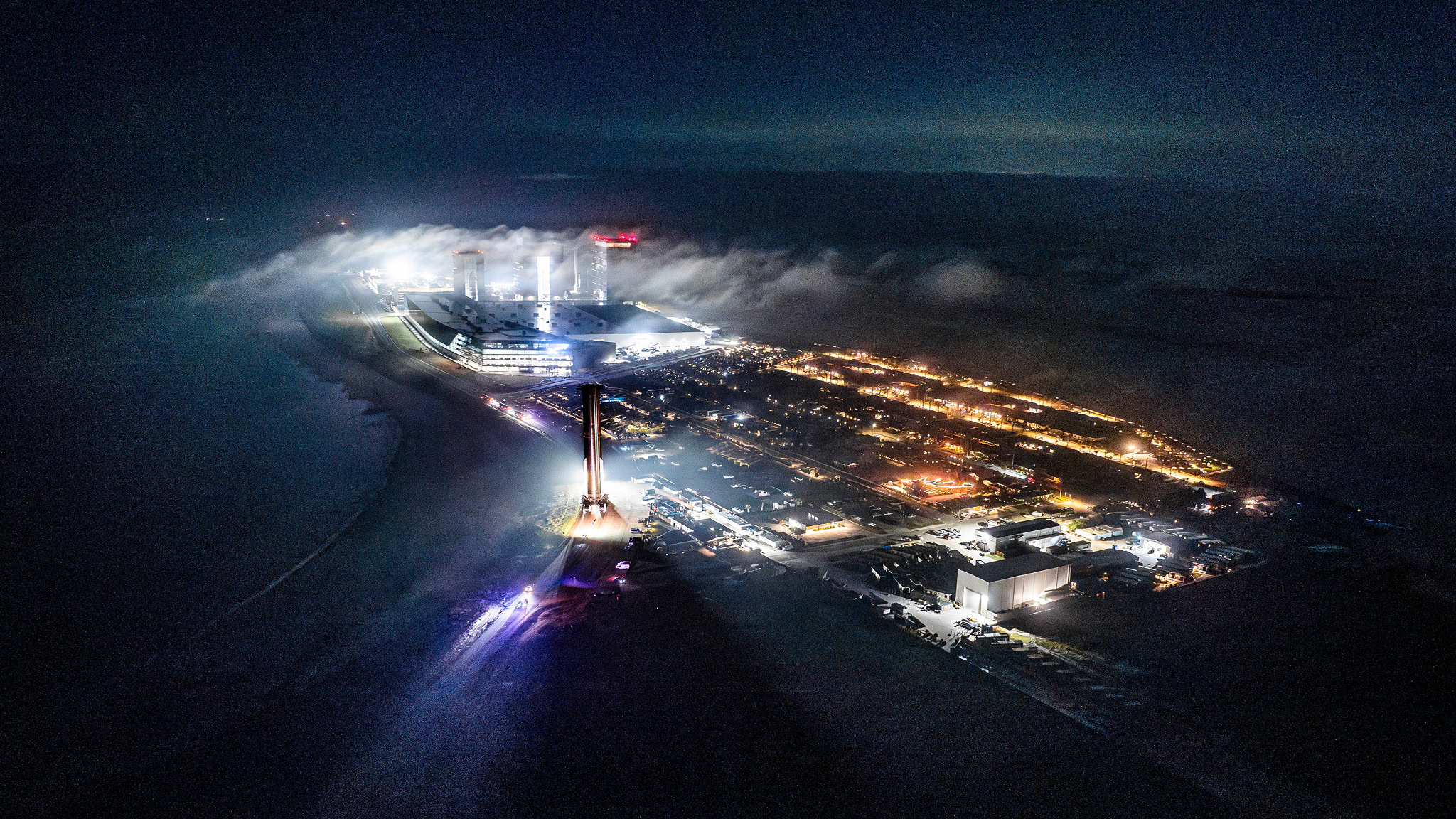
Starship and Super Heavy are designed to return to the launch site and be caught following their flight, with the ability to rapidly turn around and launch again without refurbishment.
On-orbit refilling
Starship leverages tanker vehicles (essentially the Starship spacecraft minus the windows) to refill the Starship spacecraft in low-Earth orbit prior to departing for Mars. Refilling on-orbit enables the transport several hundred tonnes of cargo per ship all the way to Mars. And if the tanker ship has high reuse capability, the primary cost is just that of the oxygen and methane, which is extremely low.

Starbase
Development, manufacturing, testing, and launch of Starship takes place at Starbase, home to SpaceX headquarters and one of the world's first commercial spaceports designed for orbital missions.
Starfactory
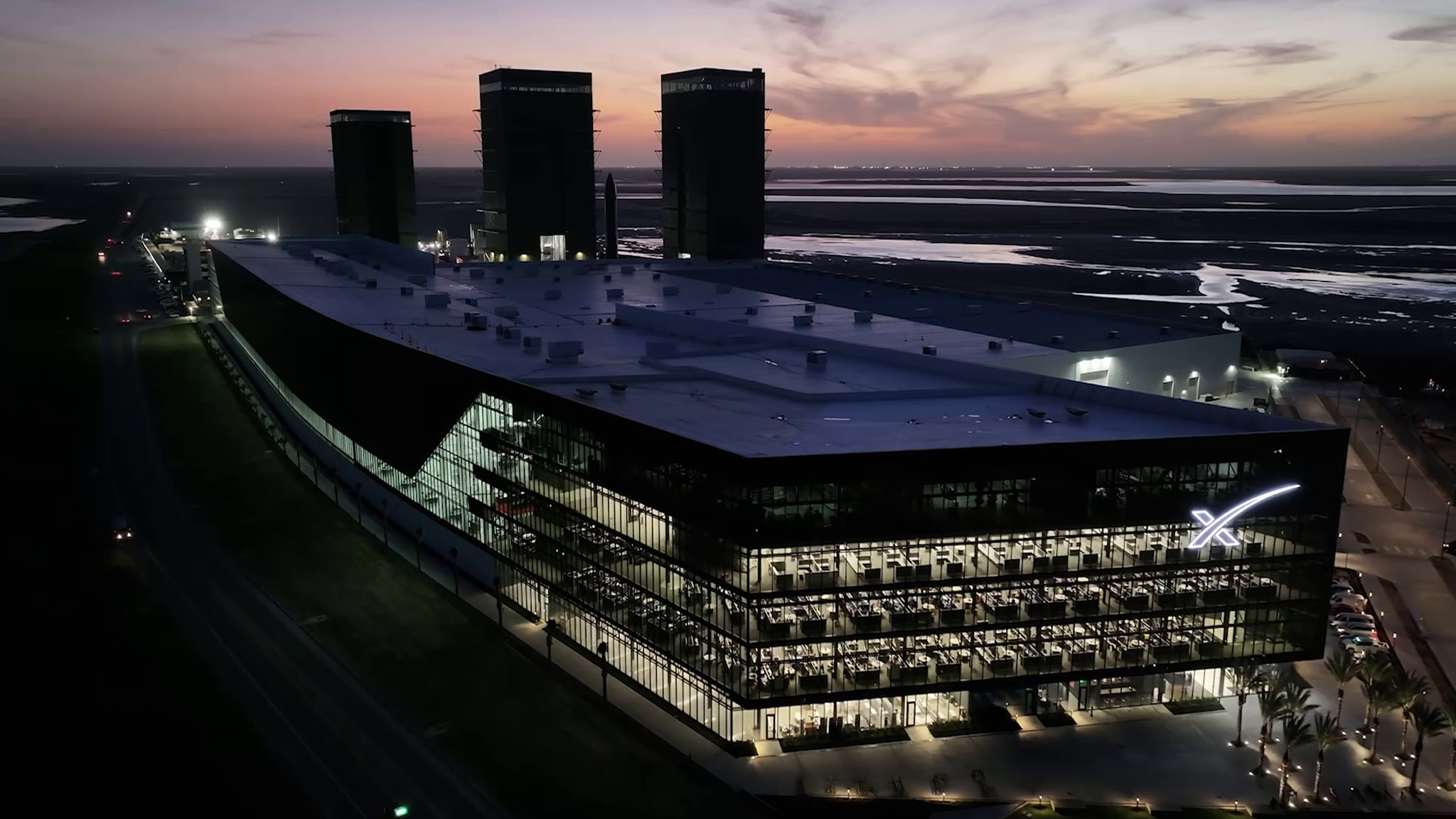
Manufacturing hub for Starship and Super Heavy. Sized to be capable of building up to 1,000 Starships per year in order to send enough crew and cargo during Mars transfer windows to build a self-sustaining civilization.
Launch and test
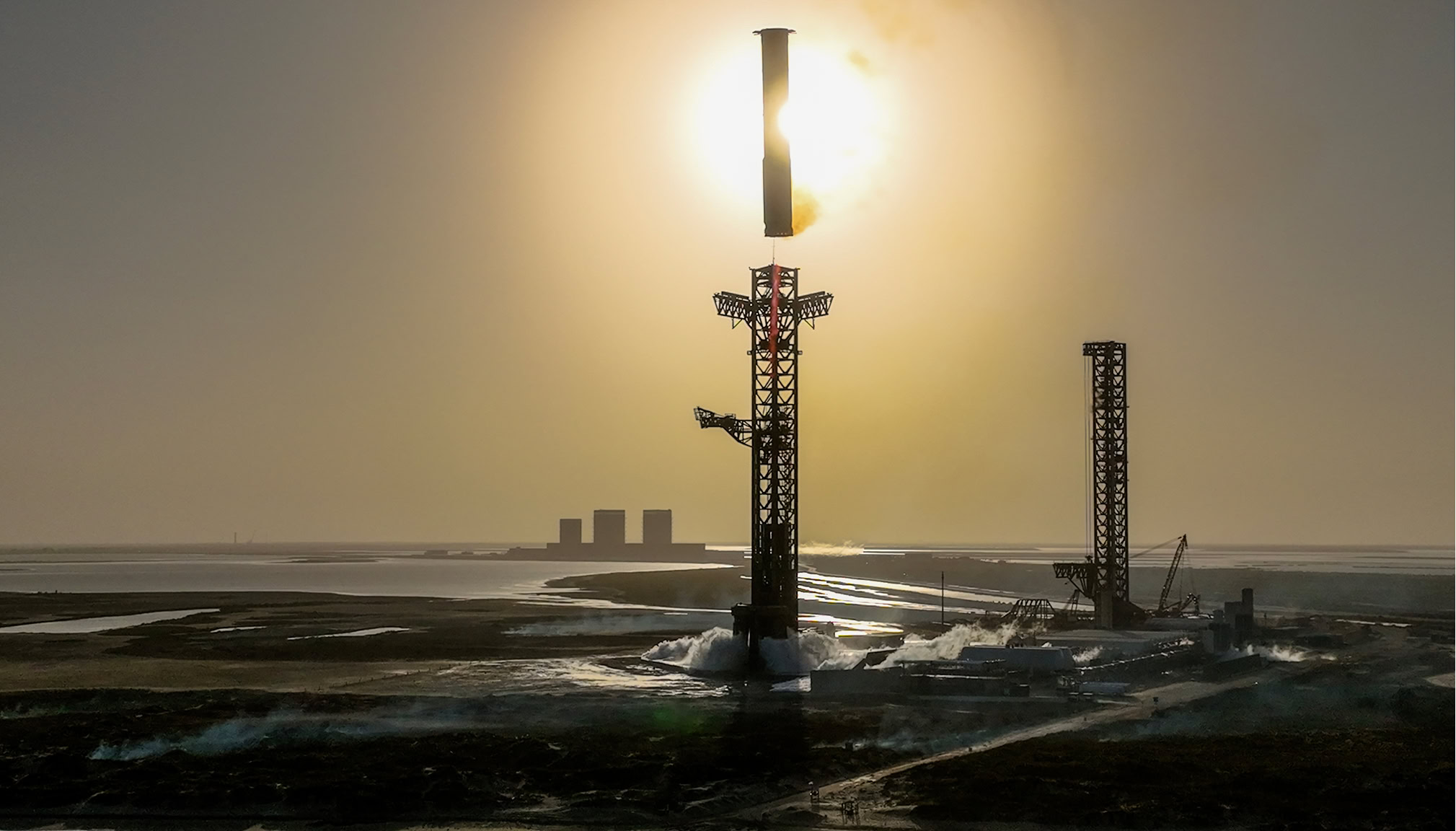
Orbital launch pad and vehicle test site for prelaunch testing and flight of the world's most powerful rocket. The Starbase launch pad has two of the tallest launch towers in the world, specially designed to integrate, test, launch, and catch Starship and Super Heavy vehicles.
For inquiries about Starship and our human spaceflight program, contact sales@spacex.com